AI Liability Insurance
AI liability insurance protects companies that build or deploy AI when a model output causes third-party harm: a hallucinated answer a customer relied on, an IP or defamation claim from generated content, an unauthorized data disclosure, a biased decision, or a regulator asking questions. For most AI companies that cover is assembled from a coordinated Tech E&O, Cyber, and D&O program, so an AI-driven claim does not fall through the gaps between policies. RiskCube places that program and checks every policy for AI exclusions before binding.
Most companies get quotes within 24 hours
Who needs AI liability insurance and why does it matter?
AI companies face exposure that standard policies weren't written to cover — model failures, agentic actions, training-data disputes, and hallucination-related claims. Enterprise buyers and investors require proof of coverage before procurement approval, onboarding, or term-sheet close.
LLM & foundation models
You build or fine-tune large language models. Your outputs influence customer decisions across finance, healthcare, legal, and enterprise operations. Model errors, hallucinated outputs, and unauthorized data use lead to client financial-loss allegations, regulatory investigations, and IP disputes.
Agentic AI and MCP platforms
Your AI agents act autonomously — browsing, writing, executing, transacting — on behalf of enterprise customers. Unauthorized actions, data exfiltration through compromised sessions, or out-of-bounds transactions create cyber and professional liability exposure no standard policy was written to cover.
AI in regulated verticals
You process clinical decisions, financial recommendations, or government data with AI. A single model failure or adverse output can trigger regulatory action, contract disputes, and personal liability for your leadership team.
AI SaaS serving enterprise
Your procurement buyers run vendor-risk reviews before onboarding. They want Tech E&O, Cyber, and D&O listed on the COI — and they check for AI exclusions or sublimits that could leave your coverage hollow in a claim.
AI companies raising capital
Your lead investor put D&O as a closing condition in the term sheet. Board candidates won't take a seat without it. RiskCube closes the coverage gap across all three policies in a single application, so the round moves on schedule.
Defense and govtech AI
You sell AI software into federal or state agencies. FAR/DFARS flow-downs, ITAR requirements, and agency security frameworks require coverage from top-rated, admitted carriers — and may require AI-specific wording in the policy. Coverage must be documented on a compliant certificate of insurance before award. See our insurance requirements guide for the line-by-line requirements agencies expect.
The AI liability risks you are insuring against
When your product or your team uses AI, these are the exposures that turn into real claims, and the ones underwriters now ask about. Standard general liability policies have begun adding generative-AI exclusions, which is exactly why AI-aware wording across your Tech E&O, Cyber, and D&O matters.
Model errors and hallucinations
Your AI produces a wrong answer, a bad recommendation, or a fabricated fact, a customer relies on it, and loses money. This is the most common AI liability claim, and standard general liability does not respond to pure financial loss.
IP and copyright infringement
Generated output, or the data a model was trained on, reproduces someone else's copyrighted work, trademark, or likeness, and the rights holder brings a claim that can follow the output into your customer's product.
Defamation and false statements
An AI output states something false and damaging about a real person or business. Hallucinated accusations have already produced real defamation suits against AI providers.
Unauthorized data disclosure
An assistant surfaces one customer's personal or financial data to another, or leaks protected information through an output, triggering privacy liability and breach-notification duties.
Bias and discrimination
An AI used in hiring, lending, pricing, or content decisions produces discriminatory outcomes, exposing you to employment and civil-rights claims and regulatory scrutiny.
Bodily injury and property damage
An AI gives unsafe guidance, or an autonomous system acts on a flawed decision, and a person is physically harmed or property is damaged. New standard-policy exclusions increasingly push these losses onto specialist cover.
Agentic actions and cyber incidents
Your AI agent takes an action outside its intended bounds, executes the wrong transaction, or an attacker hijacks an authenticated agent session through prompt injection or model theft.
Regulatory action
A state or federal regulator opens an inquiry under an AI transparency, fairness, or consumer-protection rule. Defense costs begin well before any finding of wrongdoing.
"RiskCube compared AI company quotes across 5 carriers and showed us exactly where the coverage gaps were — we closed our Series A with confidence."
What is AI liability insurance?
AI liability insurance (sometimes called AI company insurance) is coverage for the third-party harm your AI can cause: a model error or hallucination a customer relied on, generated content that infringes IP or defames someone, an unauthorized data disclosure, a biased decision, bodily injury or property damage, or a regulatory action. For most AI companies that exposure is covered through AI-aware Tech E&O, Cyber, and D&O working together, rather than a single policy.
Standard policies often contain "silent AI risk" — they were written before LLM products existed and neither affirmatively cover nor explicitly exclude AI-related losses. When a claim lands, coverage disputes arise over whether AI-driven harm is "professional services," "cyber," or something excluded entirely. RiskCube reviews every policy for AI exclusions or sublimits before binding.
Tech E&O (Errors & Omissions)
Responds when your AI product causes a client financial loss, performs incorrectly, fails to deliver, or produces outputs leading to third-party claims. This is the primary policy for model failures, hallucination-related allegations, and professional liability arising from AI services.
Cyber Liability
Covers data breaches, ransomware, and cyber incidents — including AI-specific exposures like prompt injection, model theft, training-data poisoning, and agentic AI sessions compromised by attackers. First-party breach response and third-party liability both covered.
D&O (Directors & Officers)
Protects founders and board members personally from investor lawsuits, regulatory investigations, and "AI washing" allegations — claims that leadership overstated AI capabilities in fundraising materials or public disclosures.
See the AI claim scenarios below for concrete examples of how these policies respond when an AI output causes harm.
What's covered
Model errors and professional liability
Tech E&O responds when AI outputs cause client financial harm, contract failures, or professional negligence allegations.
Agentic AI incidents
Coverage for losses when your AI agent takes an unauthorized action, exposes customer data, or executes a transaction outside intended bounds.
Data breaches and cyber events
Forensics, breach response, notification, and regulatory defense after unauthorized database access or ransomware.
AI governance claims (D&O)
Investor lawsuits and regulatory investigations naming founders and board members over AI oversight, "AI washing," or governance failures.
Training data and model security
Response coverage for poisoned training data, prompt injection, model theft, or jailbreaks that compromise your service.
Regulatory defense
Covers responses to state AG inquiries, FTC investigations, and enforcement actions triggered by AI output failures or privacy violations.
Bias and discrimination claims
Algorithmic decisions that produce discriminatory outputs — in hiring, lending, healthcare, or content moderation — can trigger regulatory investigations and civil claims. Tech E&O and Cyber policies with AI-aware wording respond to covered allegations arising from biased model outputs.
Contractual indemnity exposure
Enterprise AI contracts often include broad indemnification clauses that shift liability to your company when a model failure or service error triggers a loss. Tech E&O policies with contractual liability coverage respond when an indemnity clause is triggered by a covered AI incident.
Coverage varies by policy terms, conditions, and limits.
Common Exclusions
Silent AI risk (unendorsed policies)
Standard policies without AI-specific wording may dispute coverage for AI-driven losses. RiskCube checks for this before binding.
Foundation model provider outages
If an OpenAI/Anthropic/Google outage takes your product offline, standard cyber policies may exclude third-party cloud provider failures. Specialty wrap products close this gap.
Intentional model misuse
Deliberate misrepresentation of AI outputs, fraudulent conduct, or intentional data misuse fall outside covered events.
Prior known incidents
Claims relating to model failures, security events, or regulatory inquiries known before policy inception may not be covered.
AI washing (D&O fraud exclusion)
Actual proven fraud — not just negligent overpromising — typically falls outside D&O coverage. The fraud exclusion applies only after final adjudication.
Varies by carrier and policy wording; some exclusions have exceptions.
Not sure what your policy excludes? Talk to an expert
AI claim scenarios, and which policy responds
Operational-risk and procurement teams want concrete examples before they buy. Each scenario below maps a plausible AI failure to the coverage that responds. Scenarios are illustrative, and whether any given claim is covered depends on the policy wording, conditions, and limits.
A support assistant gives wrong integration steps
An enterprise customer follows onboarding steps your AI assistant generated, hits extended downtime, and claims the lost revenue was caused by the incorrect guidance.
Responds: Tech E&O
A chatbot fabricates a false claim about a person
A customer-facing assistant generates a damaging, untrue statement about a named individual, who then sues your company for defamation.
Responds: Tech E&O / Media liability
A generated campaign copies protected work
Marketing content your tool produced reuses a competitor's trademarked tagline or a photographer's copyrighted image, and the rights holder brings an infringement claim.
Responds: Media liability / Tech E&O
An assistant leaks another customer's data
A retail chatbot reveals one shopper's order history and payment details to a different user, triggering privacy claims and breach-notification obligations.
Responds: Cyber
An agent session is compromised
An attacker hijacks an authenticated AI-agent session and exfiltrates customer data from several enterprise accounts. Cyber funds forensics and notification; Tech E&O responds to the failure-to-safeguard allegation in service delivery.
Responds: Cyber + Tech E&O
A screening model discriminates
An AI hiring or lending tool produces outcomes a group alleges are discriminatory, and applicants bring a civil-rights or employment claim.
Responds: Tech E&O / EPLI
Investors allege the founders overstated the model
After performance misses forecast, investors allege the founders overstated the model's accuracy in the pitch deck and name them personally in a securities claim. D&O funds the defense and protects founders' personal assets.
Responds: D&O
Coverage built for AI and agentic companies
Standard policies were written before LLM products existed. Many carriers leave "silent AI risk"—losses tied to agent behavior, training-data disputes, hallucinated outputs, or third-party model failures—in a disputed gray zone between policies.
RiskCube places AI programs that affirmatively address these exposures:
Agentic AI incidents
Coverage for losses when your AI agent takes an unauthorized action, exposes customer data, or executes a transaction outside intended bounds.
Training data & model security
Response coverage for poisoned training data, prompt injection, model theft, or jailbreaks that compromise your service.
AI-specific wrap coverage
When primary Cyber and Tech E&O policies exclude AI risks—or when a foundation model provider (OpenAI, Anthropic, etc.) outage takes your product offline—we layer specialty products so a single AI-related claim doesn't fall between two policies.
24h
from completed application to vendor-ready COI
From application to Certificate of Insurance (COI), often in ~24 hours
Assess your unique risk profile
~10 min · one-time form
Complete a short digital intake form so we can understand your unique risk profile, your industry, stage, contracts, and exposures.
AI & brokers scan the market
Top-rated carriers compared
Our AI agents and licensed brokers scan the market's top-rated carriers to find the best quotes for your business.
Close the deal with proof of coverage
Vendor-ready in ~24 hours
We present the options that satisfy your vendor requirements and get you proof of coverage, so you can close the deal.
Assess your unique risk profile
~10 min · one-time form
Complete a short digital intake form so we can understand your unique risk profile, your industry, stage, contracts, and exposures.
AI & brokers scan the market
Top-rated carriers compared
Our AI agents and licensed brokers scan the market's top-rated carriers to find the best quotes for your business.
Close the deal with proof of coverage
Vendor-ready in ~24 hours
We present the options that satisfy your vendor requirements and get you proof of coverage, so you can close the deal.
FAQs About AI Liability Insurance
Here are answers covering AI-aware coverage, silent AI risk, the Tech E&O + Cyber + D&O stack, and startup eligibility. Every response is reviewed by our licensed brokerage team.
Getting started
As a startup, can we access top-rated carriers for AI coverage through RiskCube?
Yes. RiskCube places AI coverage through leading wholesale specialty brokers, including RT Specialty and AmWins. Those wholesale relationships connect our clients to financially strong carriers, including many rated A or A+ by AM Best. A number of these carriers write specialized startup risks only through wholesale channels, so working with RiskCube gives an early-stage company the market access and underwriting expertise of a much larger firm, not fewer options because of its size.
What is AI liability insurance?
AI liability insurance (also called AI company insurance) covers third-party harm caused by your AI: model errors and hallucinations, IP and copyright infringement, defamation, unauthorized data disclosure, bias, bodily injury, and regulatory action. For most AI companies it is assembled from AI-aware Tech E&O, Cyber, and D&O, so an AI-driven claim is not left in a disputed gray zone between standard policies.
Do AI startups need Tech E&O, Cyber, and D&O all at once?
Most enterprise contracts and investor term sheets require all three. Tech E&O covers your AI product's professional liability, Cyber covers data security events, and D&O protects founders and board members personally. Procurement teams check the COI for each line. RiskCube places all three in one application so you're not juggling three separate brokers and three renewal dates.
What is "silent AI risk"?
Silent AI risk refers to coverage gaps in standard policies that were written before AI products existed. These policies neither affirmatively cover nor explicitly exclude AI-driven losses — they're "silent" on the question. When a claim arises from a model failure or agentic action, disputes emerge over which policy applies and whether the loss is covered at all. AI-aware policies close this gap with explicit coverage language. RiskCube reviews every policy for silent AI risk before binding.
Coverage basics
Does D&O cover "AI washing" claims?
Yes — D&O is the policy that responds when investors allege founders overstated AI capabilities in fundraising materials, pitch decks, or public disclosures. When the reality diverges from the representation, shareholders sue and name founders personally. D&O funds the defense. RiskCube checks every AI-company D&O policy for AI-specific exclusions or sublimits before binding so you're not exposed when the claim arrives.
Does standard cyber insurance cover agentic AI incidents?
Standard cyber policies were written before agentic AI existed and often don't affirmatively address losses from unauthorized agent actions, compromised authenticated sessions, or out-of-bounds transactions. Coverage disputes are common. RiskCube places cyber programs that explicitly address agentic AI exposures, including prompt injection, model theft, and agentic session compromise.
What happens if my AI product is built on a third-party model and that model causes the loss?
If the foundation model provider (OpenAI, Anthropic, etc.) causes the underlying failure, standard Tech E&O and Cyber policies may dispute coverage — the harm came from a third party's model, not your product per se. This is a known gap. RiskCube can layer specialty wrap products that close this exposure for AI companies dependent on third-party foundation models.
Cost & sizing
What affects AI insurance pricing?
Pricing across the three policies depends on:
- Model access controls and security posture (for Cyber)
- The nature and scope of outputs that could cause client financial harm (for Tech E&O)
- Fundraising stage and board composition (for D&O)
- The sensitivity of customer data your product processes
- Whether your product operates in regulated verticals
Documented security controls and clear AI governance documentation typically improve underwriting outcomes.
How fast can AI startups get quotes?
RiskCube can typically deliver quotes within 24 hours of a completed application. After you select policies and coverage binds, we can issue a COI — vendor-ready proof of insurance — within 24 hours.
The AI coverage stack
Compare AI insurance quotes built for your stage
Enterprise customers and institutional investors require Tech E&O, Cyber, and D&O before procurement approval, SOC 2 completion, or term-sheet close. RiskCube compares carrier options across all three lines and places AI-aware coverage — so your policy actually responds when an AI-driven claim lands.
 Y Combinator F24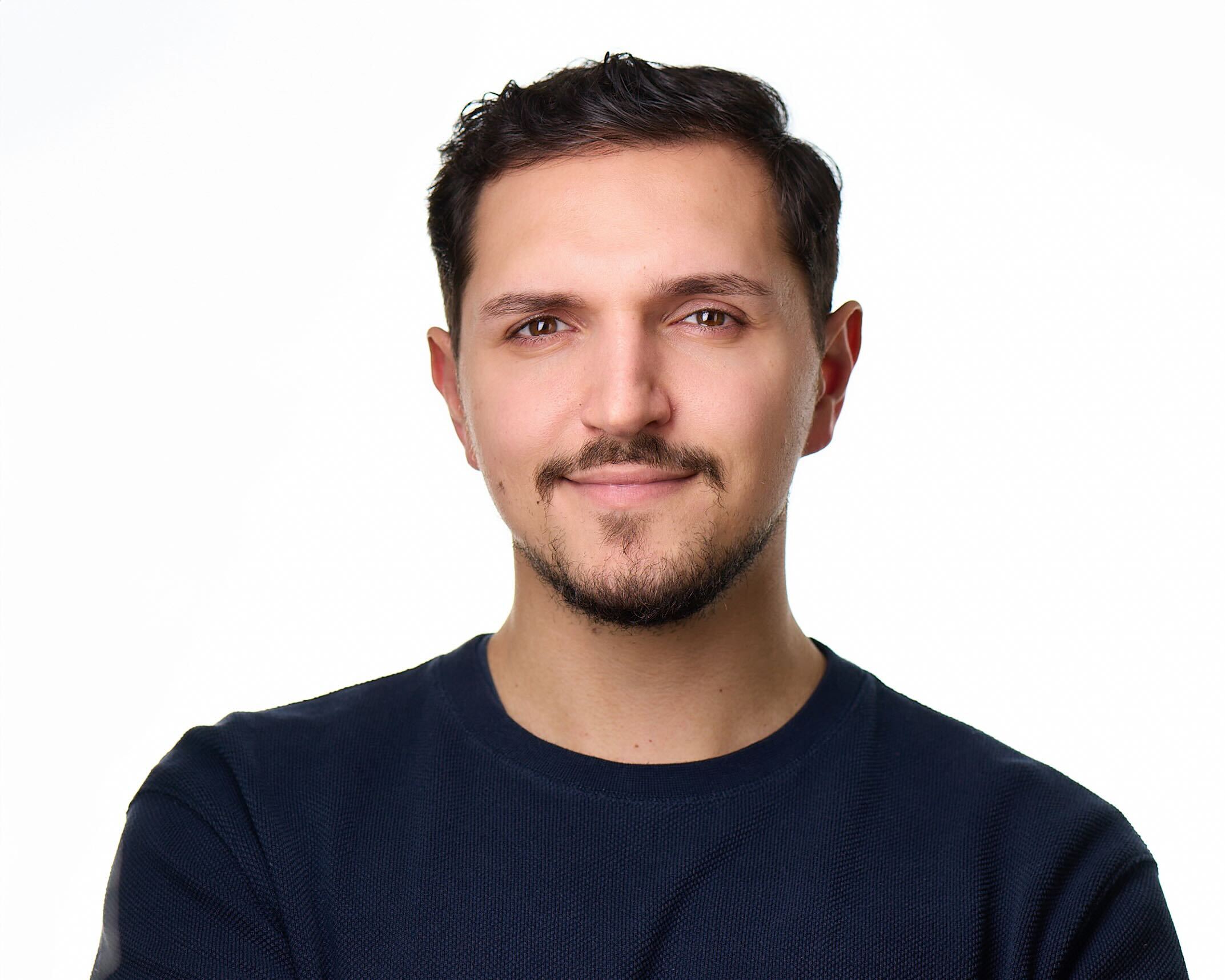
About the author
Andrei Craciunescu
Founder & CEO, RiskCube · CA License #4467994
LinkedIn ProfileAndrei previously worked in the Risk & Analytics division of WTW (Willis Towers Watson), one of the world's largest insurance brokers and a recognized leader in AI, space, and defense risk. He holds an M.Sc. in Mathematics from LMU Munich and conducted PhD-level research in financial mathematics, including directors and officers (D&O) insurance, at the Technical University of Munich (TUM). His work applies AI and risk analytics to translate complex exposures into actionable insurance coverage decisions for VC-backed startups and small-to-medium businesses across the U.S.