Key takeaways
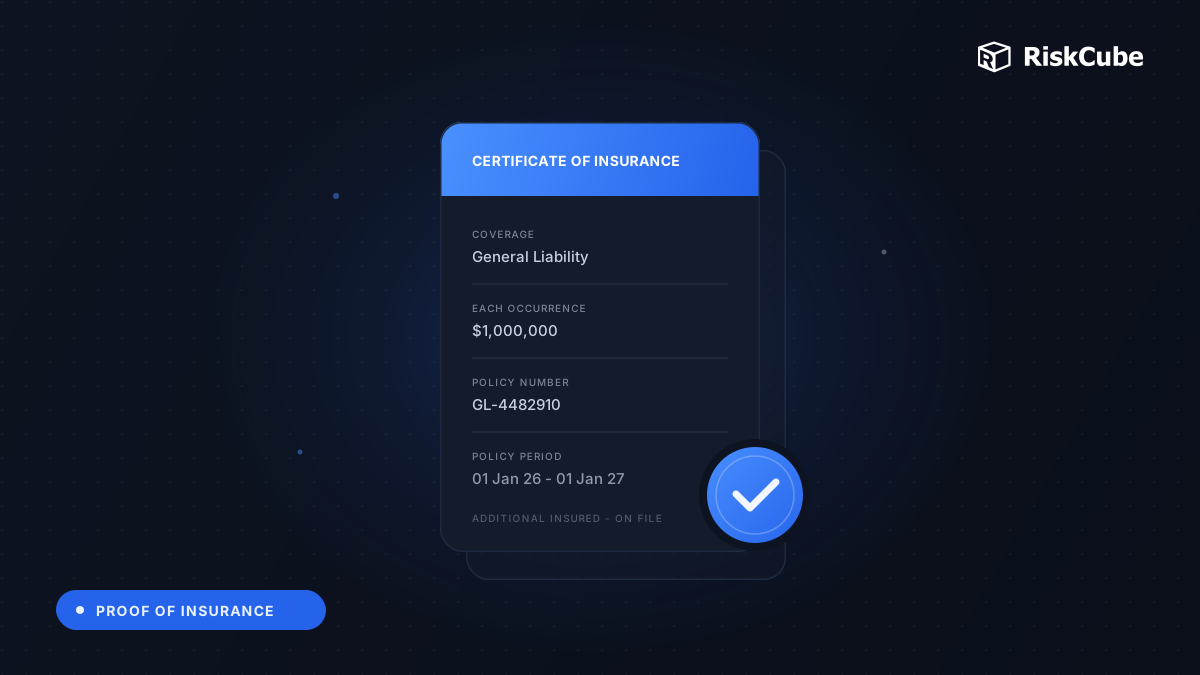
- A certificate of insurance (COI) is one-page proof that your company holds active coverage. In the US it is the ACORD 25 form.
- Only your broker or insurer can issue a COI. You cannot create one yourself.
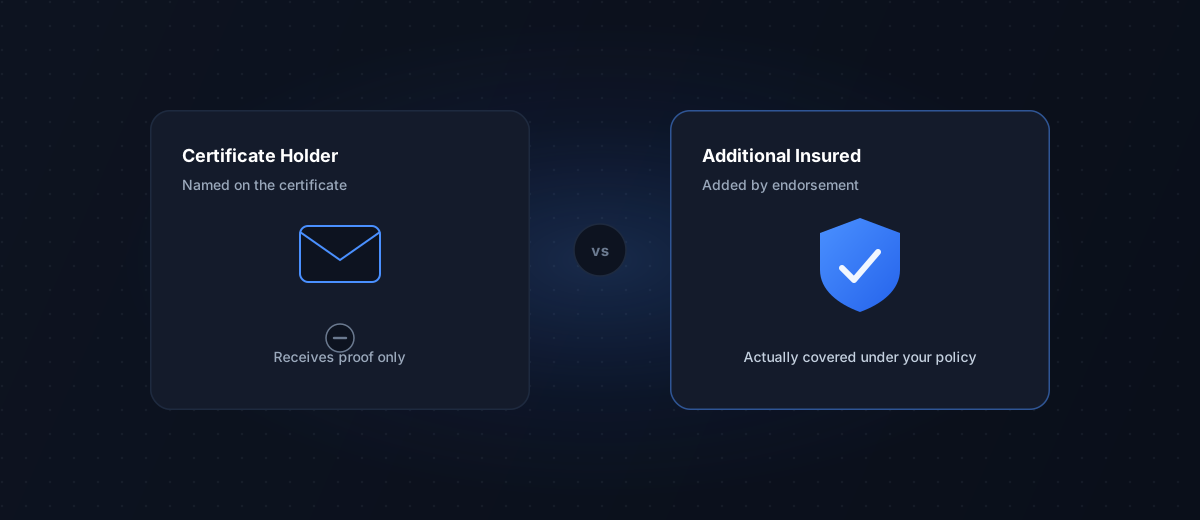
- A certificate holder only receives proof of coverage. An additional insured is actually covered under your policy via an endorsement, which most contracts require.
- With the right endorsements already on your policy, a broker can turn a COI around fast. RiskCube issues one in as little as 24 hours.
What Is a Certificate of Insurance?
A certificate of insurance (COI) is proof that your company holds an active insurance policy. To be valid, it has to be issued by your broker or the insurance provider that wrote your policy. You cannot make one yourself.
A COI is a lot like a receipt or paperwork record of your insurance. It doesn't change your policy in any way. Nor does it give the person holding it any coverage of their own. Instead, it's a record that insurance exists.
In the US, this document is called the ACORD 25.
What Does an ACORD 25 (COI) Include?
Here's what you will find on the ACORD 25.
| Field | What it means |
|---|---|
| Insured | Your company's legal name and address |
| Producer | Your broker's name and contact info |
| Coverage types | Which lines of coverage you have: GL, Tech E&O, Cyber, D&O, and so on |
| Policy numbers | One for each active policy |
| Effective and expiration dates | The window each policy covers |
| Limits | The per-occurrence and aggregate dollar amounts for each line |
| Certificate holder | Whoever's receiving this certificate |
| Endorsements noted | Any add-ons, like additional insured, waiver of subrogation, primary and non-contributory |
| Cancellation notice | Language on what happens if a policy gets canceled, subject to the policy itself |
Certificate Holder vs. Additional Insured: Know the Difference
Additional insured vs. certificate holder: what's the difference and how does it impact the contract you have?
- A certificate holder is the name on the certificate. If something goes wrong on a project and they are connected to a claim, being a certificate holder gives them zero rights under your policy.
- An additional insured is a person or company that gets added to your policy via an endorsement (a formal change to the policy itself). They're covered under your insurance.
A lot of enterprise and government contracts ask for additional insured status. If your broker sends over a COI naming the client as certificate holder only, and the contract calls for additional insured, you haven't met the requirement.
Before you request your COI, find out which one your client needs. A certificate holder listing takes minutes. An additional insured endorsement changes the policy itself, so your broker needs to know.
Example
Say there's a defense-tech startup that signs on as a subcontractor to a prime contractor. The contract says the subcontractor has to name the prime as an additional insured on its general liability (GL) policy.
The startup's broker sends a COI, but it lists the prime as certificate holder. The prime's compliance team rejects it. A certificate holder has proof that coverage exists, but that is the extent of it. In short, no endorsement means no protection.
The broker then adds the additional insured endorsement to the GL policy and reissues the certificate. Now, the prime has coverage for claims relating to the startup's work, and the contract's insurance requirement is satisfied. The deal can go ahead.
Here's a brief comparison:
| Certificate holder | Additional insured | |
|---|---|---|
| Named on the COI | Yes | Yes |
| Actually covered under your policy | No | Yes |
| Requires a policy endorsement | No | Yes |
| Satisfies an "additional insured" contract clause | No | Yes |
The 6 Most Common COI Mistakes Founders Make
Here are the six mistakes that are most common when founders deal with COI insurance for a contract.
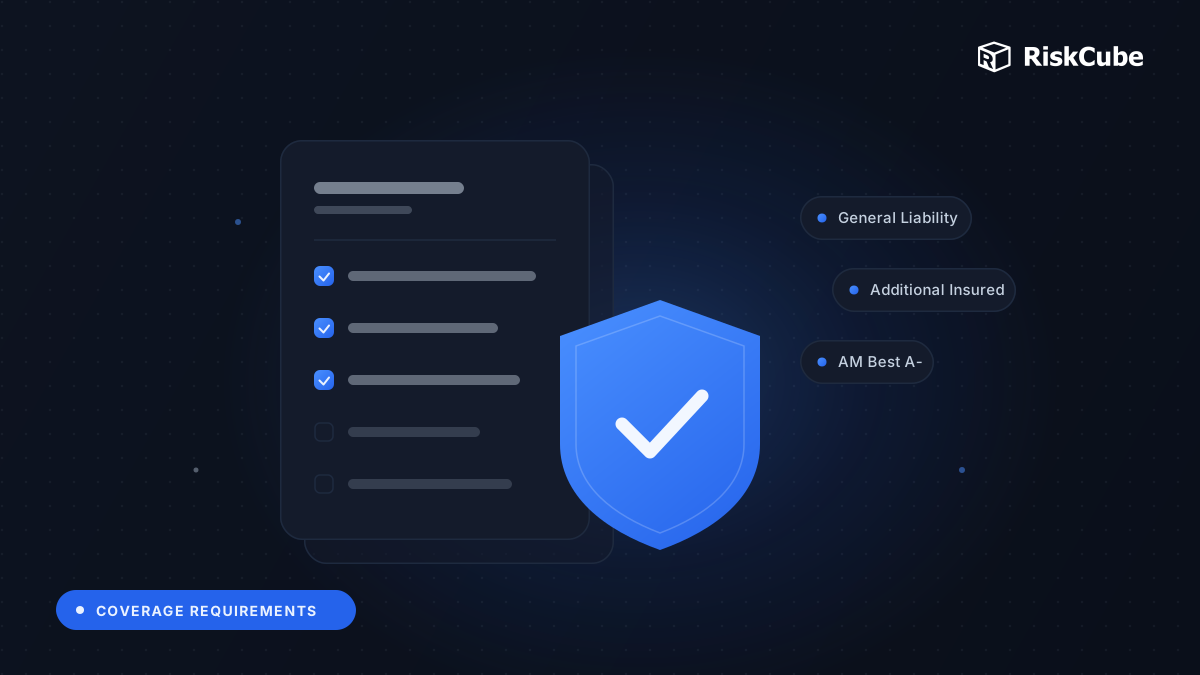
The Carrier Isn't AM Best Rated
You can send over a perfectly formatted COI, and it'll still get rejected if the insurer behind it doesn't have a rating. Procurement teams in banking, government, and healthcare are more likely to check on this specifically; they typically want to see an A- or better from AM Best.
Look the carrier up yourself at ratings.ambest.com before you commit to a policy.
The Certificate Holder's Name Is Wrong
Compliance reviewers check names against legal filings. Something like "Google" instead of "Google LLC" is enough to send your certificate back. Double-check that you have the client's exact legal entity name.
The Additional Insured Endorsement Wasn't Added
A certificate holder listing and an additional insured endorsement solve different problems. Swapping one for the other doesn't work. If the contract calls for additional insured status, the endorsement has to go on the policy before the COI is issued.
Assuming the COI Promises Advance Notice of Cancellation
The ACORD 25 says cancellation notice goes out "in accordance with the policy provisions." If your contract requires 30 days' notice before a policy lapses, you will need a dedicated cancellation notice endorsement added to the policy.
Requesting the COI Too Late
If you need additional insured or waiver of subrogation endorsements added, give your broker at least 2 to 3 business days before the contract deadline.
Reusing an Old COI for a New Client
A COI names one certificate holder. The one you got for Client A has Client A's name on it. Client B needs their own, with their name and their required endorsements attached.
What a Vendor Contract Actually Says
Does your contract have an insurance clause? This is asking you to show proof of coverage before work can go ahead. You'll need to supply your broker's COI to demonstrate that you have active policies that meet the coverage types and dollar limits outlined in the contract.
Read the insurance section and check for:
-
Coverage types. GL, Tech E&O, and Cyber are common in most contracts. D&O may be requested, too, for larger deals.
-
Minimum limits per line. A GL clause might read "$1,000,000 per occurrence / $2,000,000 aggregate." Make sure your policy reflects these numbers exactly.
-
Additional insured status. This requires an endorsement; a certificate holder listing alone won't cover it.
-
Waiver of subrogation. A lot of enterprise buyers ask for this. It means your insurer gives up its right to sue the certificate holder to recoup what it pays out on a claim.
-
Primary and non-contributory language. This puts your policy first in line to pay, ahead of any coverage the client already has.
How to Get a Certificate of Insurance
Getting a COI involves two steps: get the coverage bound and then request the certificate.
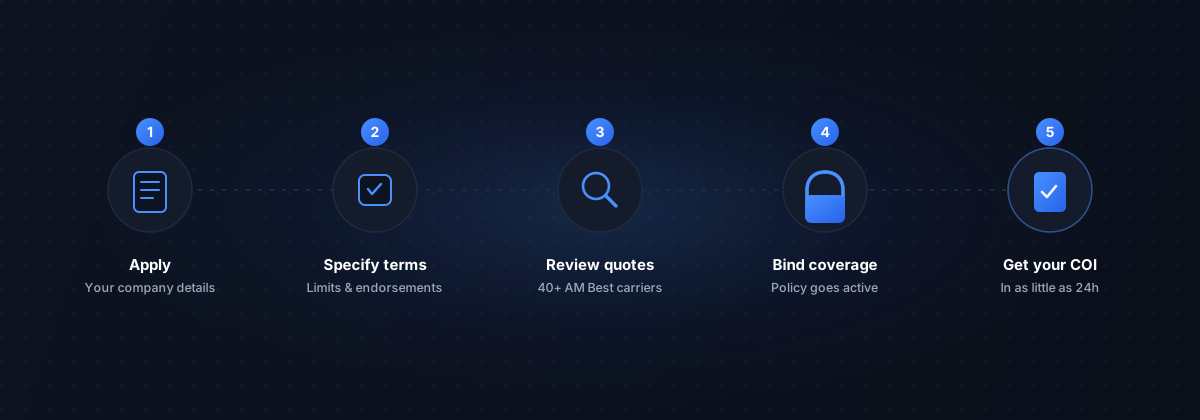
Here's how that works with RiskCube:
Start your application
Tell us your company details and the coverages you need: GL, Tech E&O, Cyber, D&O, whatever the deal requires.
Tell us what the contract requires
Enter the coverage types, the limits, and whether the contract asks for additional insured or waiver of subrogation.
Review carrier quotes
Your application goes out to 40+ AM Best-rated carriers. You can then compare quotes side by side, including premium, limits, and terms.
Pick your policy, and we bind it
This is the moment your coverage and any required endorsements become active.
Get your policy and your COI
With the policy bound and endorsements attached, we generate the ACORD 25 with your certificate holder's name on it (and additional insured status, if the contract requires it). When your coverage is bound, we can turn around a COI in as little as 24 hours.
Need GL, Tech E&O, cyber, or D&O coverage first? See our coverage pages →
Frequently Asked Questions
What does COI stand for?
COI stands for Certificate of Insurance, a one-page document from your broker proving your company has active coverage.
What is a COI?
A certificate of insurance is a one-page document from your broker that proves your company has active insurance. It lists your coverage types, limits, and policy dates for whoever requires proof.
How do I get a certificate of insurance?
Apply for the coverage a contract requires, tell your broker the required limits and endorsements, compare carrier quotes, and bind the policy. Your broker generates the ACORD 25.
Is a COI the same as an insurance policy?
No. A COI proves coverage exists. It doesn't change your policy or add coverage for anyone.
How long does it take to get a COI?
It depends on whether required endorsements are already on your policy. With endorsements in place, a broker can issue one the same day. At RiskCube, when coverage is bound, we issue COIs in as little as 24 hours.
Can I issue my own COI?
No, you cannot create your own COI. Only your broker or insurer can issue a COI.
Do I need a separate COI for every client?
Yes, in most cases, you will need a separate COI. A COI names one certificate holder. Your policy is the same still, but your broker generates a new certificate with the client's name.
How much does a COI cost?
The certificate itself is free. Brokers issue it as part of servicing your policy. You pay for the coverage it documents, and any endorsements a contract requires may carry a small added premium.
Get Your COI in As Little As 24 Hours
Need a certificate of insurance for startups? RiskCube shares your application with 40+ AM Best-rated carriers, binds your coverage, and issues your certificate in as little as 24 hours.
Apply for a quote todayKeep reading
Subcontractor Insurance Requirements: The Complete Guide
Subcontractor insurance requirements explained: the core coverages, endorsements, and AM Best carrier rating you need to sell to a large contractor.
Federal Contract Insurance Checklist (2026)
Government contractor insurance: required coverages, FAR limits, endorsements, Defense Base Act, AM Best ratings, and mistakes that delay starts.

About the author
Andrei Craciunescu
Founder & CEO, RiskCube · CA License #4467994
LinkedIn ProfileAndrei previously worked in the Risk & Analytics division of WTW (Willis Towers Watson), one of the world's largest insurance brokers and a recognized leader in AI, space, and defense risk. He holds an M.Sc. in Mathematics from LMU Munich and conducted PhD-level research in financial mathematics, including directors and officers (D&O) insurance, at the Technical University of Munich (TUM). His work applies AI and risk analytics to translate complex exposures into actionable insurance coverage decisions for VC-backed startups and small-to-medium businesses across the U.S.