Insurance Due Diligence for VCs
Understand what a company's insurance covers before you wire, and close what it doesn't, before or after you invest.
A policy can look complete and still leave your fund at risk. RiskCube handles insurance due diligence for VC and growth funds from start to finish. We read every policy line by line, identify what's missing, and arrange coverage before or after your investment closes.
Get the expert insurance due diligence venture capital needs.
For Any Investor Writing a Check
RiskCube provides insurance due diligence for VCs, including:
Deep-tech and frontier funds
AI, space, and defense-tech companies come with exposures a generalist review won't catch. Examples include algorithmic liability, launch and aviation risk, and ITAR and CMMC compliance.
Seed through pre-IPO investors
D&O exposure grows with every round. So, too, does IP risk and enterprise-contract liability. Limits set at seed rarely make sense by Series C, and the moment your partner takes a board seat, their personal liability is part of the equation.
Growth and platform teams
For funds running insurance diligence on every deal in the portfolio, RiskCube gives you one process. You don't have to reinvent the review each time you work with a new company.
Why insurance is a diligence blind spot
Insurance is worth money on a company's balance sheet. Still, many diligence teams don't treat it that way. Legal gets a deep review. So do the financials, the tech stack, the market. Insurance gets one question, "do they have coverage?", and a glance at a certificate that shows dollar amounts and nothing else.
Overlooking it costs funds money. Thin coverage or bad policy terms mean the asset on paper is worth less than it looks, and your downside is bigger than what's written in the deal memo.
Common portfolio company insurance gaps include:
D&O for portfolio companies has a hole in it
The company has directors and officers coverage. But buried in the fine print, an exclusion cancels it out for exactly the kind of claim an investor or board member would face.
Coverage doesn't reach backward
A D&O policy only protects decisions made after it started. Anything the company did before you invested has no coverage unless the policy's retroactive date reaches back far enough, even if the problem doesn't surface until later.
A deal can shut off coverage
A company's D&O policy can terminate when a deal closes, whether it was acquired or takes on a controlling investment. Unless someone buys "tail" coverage to protect the old board afterward, that protection is gone.
Old claims are still eating into your limits
Loss history can include open or unreported claims that reduce the dollars left available or claims an older policy won't pay out on at all.
Coverage doesn't satisfy what customers require
A defense-tech company might be winning contracts, but if its insurance falls short of what the primes demand, every one of those contracts is at risk.
The insurer might not be able to pay
Coverage placed with an unrated carrier means certificates get rejected by enterprise and government buyers. If a real claim comes in, that insurer may not have the money to cover it.
Any one of these can lead to a loss so significant it threatens the company's success, results in a capital call, or affects your fund's return. And you won't know until your money's already in.
What insurance due diligence covers
Coverage adequacy and limits
Does the company have the right policies in place? This will likely include Workers' Comp, Tech E&O, Cyber, GL, D&O, and product. Plus, when the business calls for it:
- Property
- Commercial Auto
- Environmental
Policy quality and exclusions
A certificate tells you almost nothing. We read the policy forms themselves, checking:
- The named insured
- The retroactive date
- Whether the policy triggers on a claims-made or occurrence basis
- Exclusions
Claims history and open exposures
We go through the loss runs looking for claims that are pending, threatened, or never reported. We check whether they were reported the right way, whether they're already impacting the available limits, and whether the company's coverage will pay out.
Transaction-triggered issues
Will a change-in-control clause terminate the D&O policy the moment the deal closes? Does the outgoing board need run-off, or "tail," coverage? Does the existing insurance follow the liabilities as the deal is structured?That last question goes to your counsel, since it's a legal one, not an insurance one.Where the transaction calls for it, we also point out tools like representations and warranties insurance, tax-liability coverage, litigation or contingent-liability coverage, and cost-cap coverage.
Your board seat
The day your partner joins a board, their personal assets are on the line.We confirm whether your designee is a named insured under the company's D&O policy, check whether the Side-A or difference-in-conditions coverage is adequate, and if it isn't, we can organize Outside Directorship Liability coverage. That way, your partner isn't personally exposed by taking the seat.
Carrier financial strength
A policy is only as good as the company standing behind it. We check whether coverage sits with AM Best-rated carriers, the kind enterprise and government buyers will accept, and the kind capable of paying out on a large claim.
Sector and contract compliance
Some sectors carry exposure that's easy to miss. For example, defense companies deal with ITAR, EAR, DFARS, and CMMC requirements. AI and fintech companies have data and privacy exposure.We check whether the company's coverage satisfies what its own customers and contracts require, flow-down provisions included.
How it works
Send us the target
Share the company's insurance policies, loss runs, and contracts driving coverage requirements. Or, connect us with the founder directly.
We read every policy
Our team checks for limits and retentions. We also look for claims history, retroactive dates, and exclusions. Then, we benchmark it against comparable companies.
Get your read, and the fix
You get a summary of what's covered, what's missing, and what it costs to fix. Ready to act? We arrange coverage before or after close, with a COI in as little as 24 to 48 hours.
What you get
A concise, investor-ready read on the target's insurance:
- Coverage-by-coverage adequacy and limits, benchmarked against the company's stage, contracts, and peers
- Exclusions, red flags, and policy-structure issues
- Claims history, plus any open or unreported exposures
- What a transaction might result in, like change-in-control D&O termination or the need for run-off coverage
- Whether your board designees have D&O and Side-A protection, and whether they need ODL coverage on top of it
- A check on carrier financial strength
- Recommended coverage, with an estimated cost to fix each issue, before or after close
This is a point-in-time insurance and risk-transfer assessment based on the documents you send us. It isn't investment, legal, tax, or audit advice.
Why RiskCube
Independent and fully licensed, RiskCube is an insurance brokerage for companies operating in AI, space, defense, fintech, and frontier tech.
We handle risk transfer for startups at every stage, from a seed-stage company's first D&O policy to a growth-stage company negotiating enterprise contracts. Our founder worked in Risk & Analytics at WTW (Willis Towers Watson) for many years, and RiskCube itself is a Y Combinator F24 company and part of the AI NATION portfolio.
We compare coverage across 40+ AM Best-rated carriers and understand the exposures a generalist review tends to miss: algorithmic liability, aviation and UAS risk, ITAR and CMMC flow-downs.
Since we run the review and place the coverage, what we find on Monday can be a bound policy by the time you close.
"A fund can do everything right on the deal and still lose money to a coverage gap nobody read. We find it before you wire, and protect the partner taking the board seat."
Portfolio support
Pre-investment insurance review is the start of the relationship. When you invest, RiskCube becomes the coverage partner for the portfolio company: one application, 40+ carriers, and fast COIs.
Platform teams get one repeatable insurance workflow for every deal, with coverage that grows alongside each round.
Frequently asked questions
What does insurance due diligence for a VC involve?
It is an expert review of a target or portfolio company's insurance program before or after you invest. RiskCube checks whether the right coverages are in place at limits scaled to the company's stage and contracts, reads the actual policy forms for exclusions and structure issues (named insured, retroactive dates, claims-made triggers) that remove protection investors rely on, reviews the claims history for open or unreported exposures, flags transaction-triggered issues like change-in-control termination and the need for run-off coverage, confirms carriers are financially rated, and checks that coverage satisfies customer and regulatory requirements. You get a concise read and a path to fix any gaps.
How is this different from a normal certificate check?
A certificate of insurance is a one-page summary that shows limits but hides exclusions, endorsements, claims history, and carrier quality. RiskCube reads the actual policy forms and assesses them against the company's stage, contracts, and sector, surfacing the gaps a certificate cannot show.
Do you review coverage before or after we invest?
Both. We run the review during diligence so you can price and negotiate the risk before you wire, and we arrange the recommended coverage before or after close, whichever fits the deal.
Can a deal actually terminate the company's insurance?
Yes. Many D&O policies contain a change-in-control provision that converts or terminates coverage when a company is acquired or takes on a controlling investment, which is why run-off (tail) coverage for the prior board is often needed at close. We flag this as part of the review.
What protects our partner personally when they take a board seat?
The portfolio company's D&O policy, if it names your designee as an insured and its Side-A cover is adequate. As part of the review we confirm both, and where there is a gap we can arrange dedicated Outside Directorship Liability (ODL) coverage so your partner's personal assets are not exposed by the seat.
Does RiskCube also arrange the coverage it recommends?
Yes. RiskCube is a broker, so a gap we identify in diligence can be placed with the right carrier before or after close, one application across 40+ AM Best-rated carriers. Legal questions about how the insurance transfers under the purchase agreement are for your counsel; we coordinate with them.
Is RiskCube giving investment or legal advice?
No. RiskCube is a licensed insurance brokerage. We provide an insurance and risk-transfer assessment, not investment advice, legal advice, or an audit opinion. Funds use our read alongside their legal, financial, and technical diligence.
Which sectors do you cover?
The companies VCs back: AI, space, defense-tech, fintech, SaaS, and frontier hardware, including the non-obvious, hard-to-place exposures (algorithmic liability, aviation/UAS, ITAR/CMMC compliance, launch risk) that generalist brokers and reviewers miss.
Assess a Deal or Cover Your Portfolio
Whether you're checking a target's coverage before you wire money or getting a portfolio company insured properly after the round closes, RiskCube can help. We give your fund an expert read on the insurance and a fast way to fix whatever we find.
CA License #6017028 · NPN 21694336 · Independent brokerage · Y Combinator F24. RiskCube is a licensed insurance brokerage providing an insurance and risk-transfer assessment only, not investment, legal, tax, or audit advice. Funds should rely on their own counsel and advisers for the investment decision.
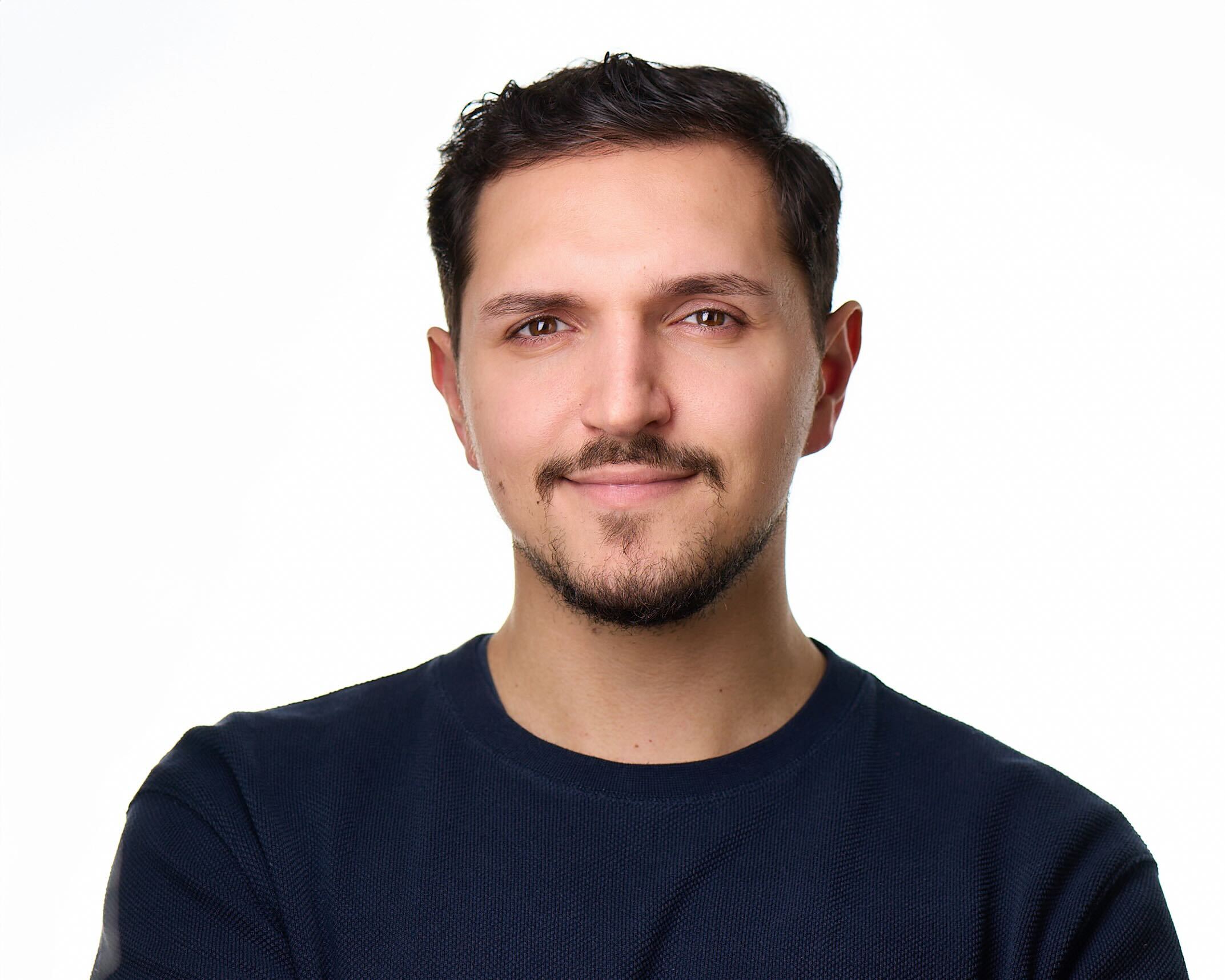
About the author
Andrei Craciunescu
Founder & CEO, RiskCube · CA License #4467994
LinkedIn ProfileAndrei previously worked in the Risk & Analytics division of WTW (Willis Towers Watson), one of the world's largest insurance brokers and a recognized leader in AI, space, and defense risk. He holds an M.Sc. in Mathematics from LMU Munich and conducted PhD-level research in financial mathematics, including directors and officers (D&O) insurance, at the Technical University of Munich (TUM). His work applies AI and risk analytics to translate complex exposures into actionable insurance coverage decisions for VC-backed startups and small-to-medium businesses across the U.S.